Neon motel signs: how they glow, and how they come back
The short answer
A neon motel sign is bent glass tubing filled with a little neon or argon gas and lit by a high-voltage transformer. Neon glows red-orange on its own; other colours come from argon, mercury and phosphor coatings. The signs can be restored by re-bending broken tubes and refilling them, which is how many motels relight their originals.
Inside one neon tube
- Glass tube with gas
- Electrode at each end
- Transformer
How does a neon motel sign glow?
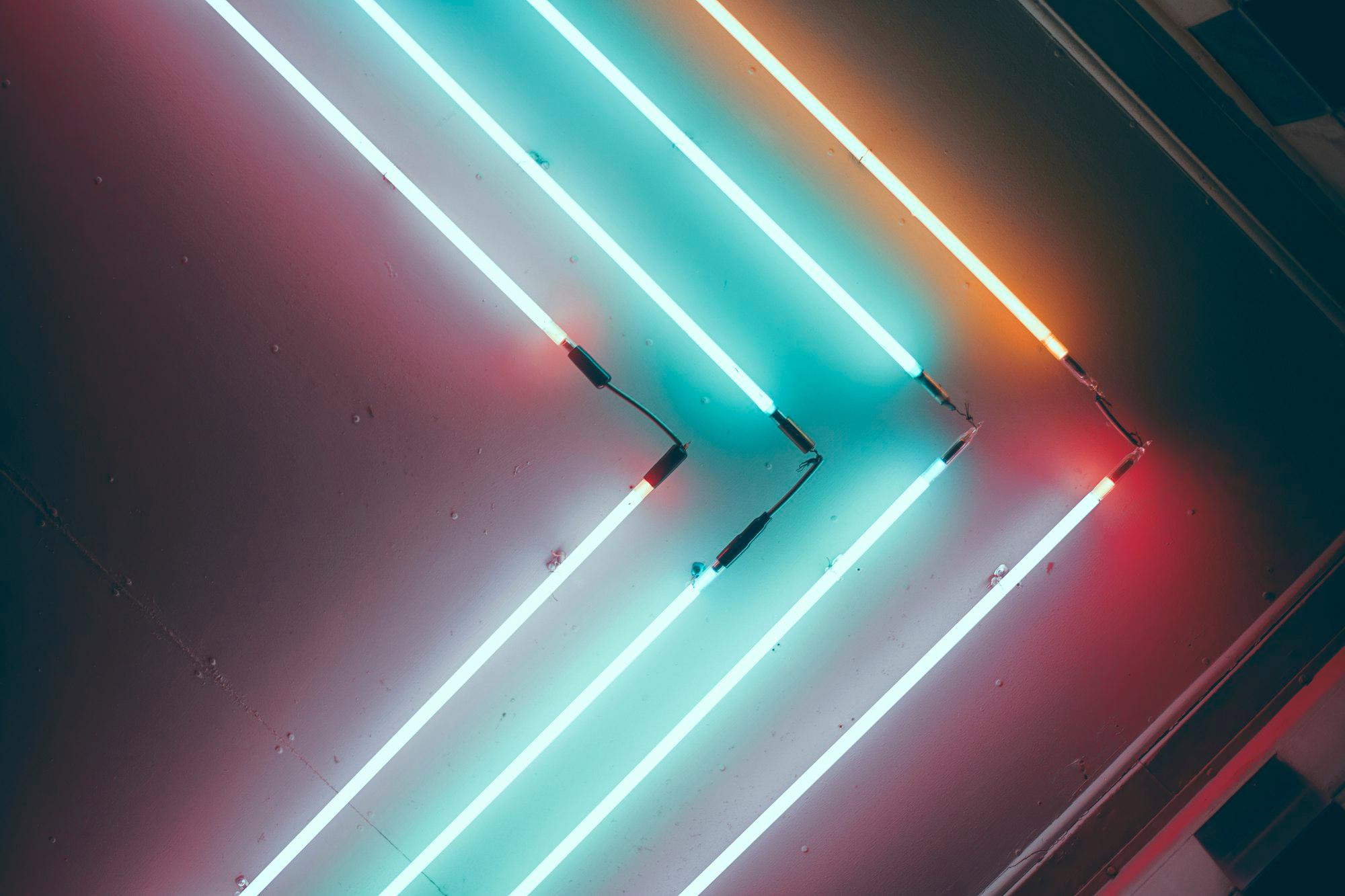
A high-voltage current passes through low-pressure gas sealed in a glass tube, from an electrode at one end to an electrode at the other. The current excites the gas atoms, and they give off light. Neon itself glows red-orange, the colour that gave the signs their name.
Everything else on an old motel sign, the blues, greens, whites and pinks, comes either from a different gas, usually argon with a drop of mercury, or from phosphor powders coated inside the glass. Those coatings turn the mercury’s ultraviolet light into visible colour, and modern sign makers can choose from nearly a hundred of them.
What colour will a tube be?
It depends on two choices: the gas and the glass. Try them below. Clear glass shows the gas’s own colour, red-orange for neon and a pale blue for argon and mercury. A phosphor coating changes the colour only when there is ultraviolet to convert, which is why it is paired with argon.
Red-orange
Pure neon in clear glass: the classic red-orange that gave the signs their name.
How is a neon sign made?
By hand, at a glass bender’s bench. The design is drawn full size, glass tubing is heated and bent to match it, electrodes are fused to the ends, the air is pumped out and the tube is filled with gas and sealed. Then a transformer lights it. Each letter can be one continuous tube.
- Draw the patternThe letters or shapes are drawn full size, reversed, so the glass can be bent to match it on the bench.
- Heat and bend the glassLengths of glass tubing are heated over burners until soft, then bent by hand to follow the pattern, one curve at a time.
- Seal in the electrodesAn electrode is fused to each end of the tube, which is the only way electricity gets into the gas.
- Clean and fillAir is pumped out, the tube is cleaned, then it is filled with a little neon, or argon with a drop of mercury, and sealed.
- Light itA transformer supplies high voltage to the electrodes and the gas glows. Neon alone gives red-orange; other gases and phosphor coatings give other colours.
Is LED neon the same as real neon?
No. LED neon imitates the look with light-emitting diodes behind a plastic diffuser, while real neon is glowing gas in glass. LED is cheaper, lighter and harder to break, and it took over much of the market: neon’s share of US illuminated signs fell from 33% in 2007 to 18% in 2010, while LED rose from 23% to 40%.
For a historic motel sign, the difference matters. Glass neon has a soft, even, all-round glow that LED struggles to copy, and replacing it changes the sign. Preservation-minded owners and grant programs generally favour repairing the original glass where it can be saved.
How are old neon motel signs restored?
A sign shop takes the sign down or works on it in place, repairs the cabinet and metal, re-bends broken tubes to the original pattern, refills the gas, and replaces transformers and wiring. Paint is matched to the original. The work can be co-funded by grants such as the National Park Service’s Route 66 program.
The Munger Moss Motel’s sign in Lebanon, Missouri, shows how it goes: it was restored in 2010 with a National Park Service grant, then, after the motel changed hands, the City of Lebanon accepted the sign as a donation in 2025, restored it again and relit it on June 1, 2026, with about 100 people watching.
When did motels start using neon?
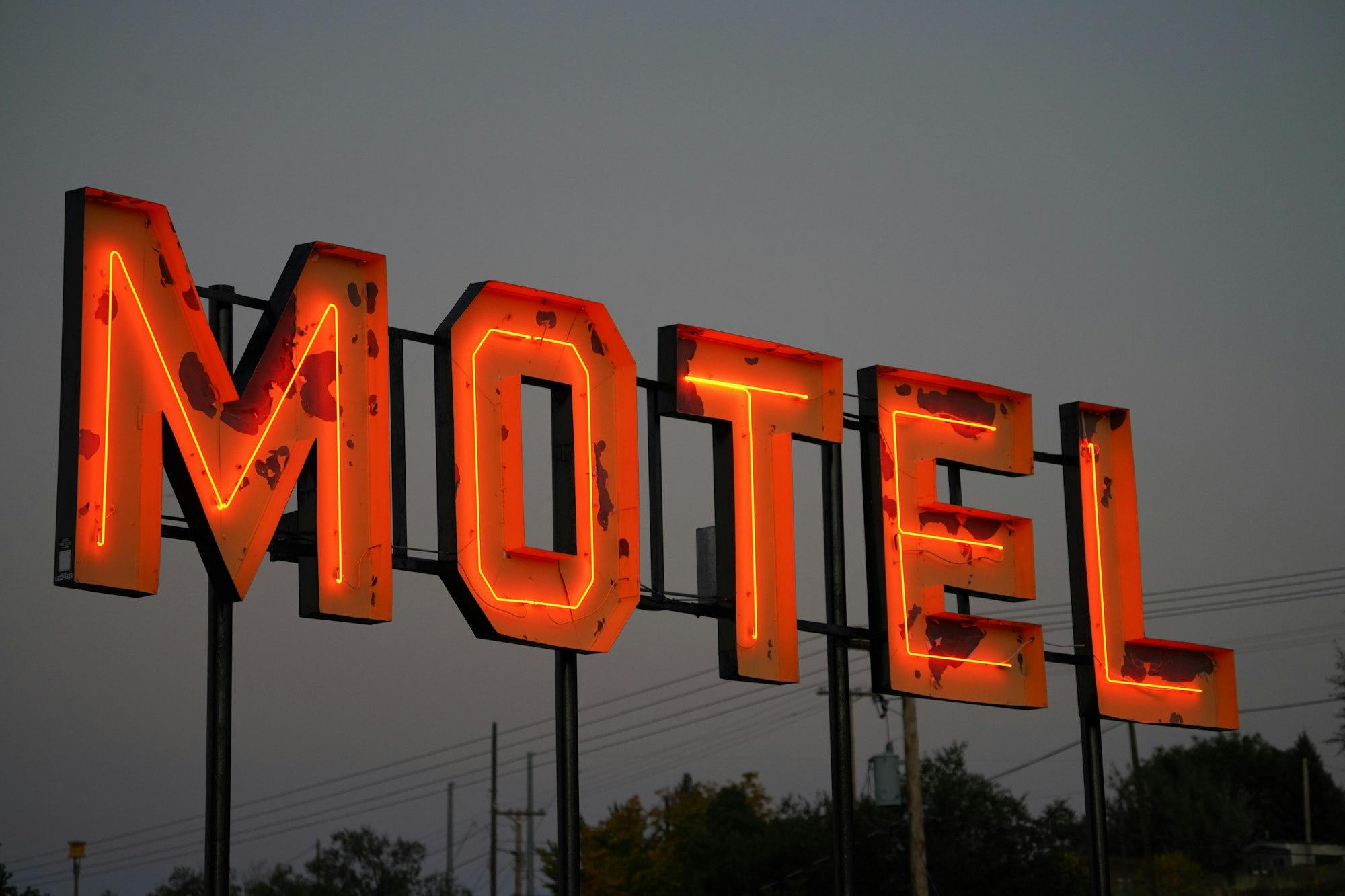
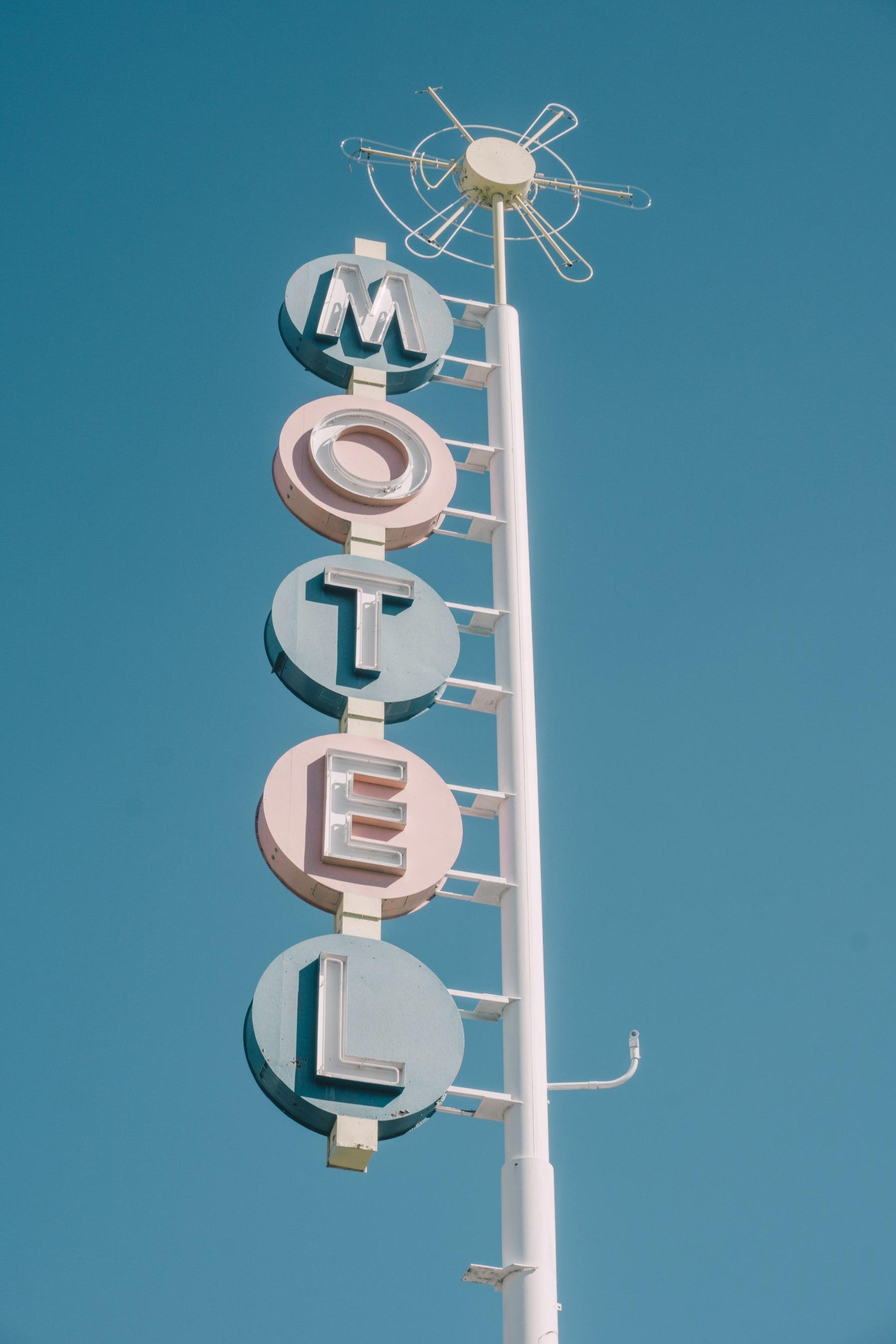
Soon after neon reached America. Georges Claude showed neon tubes in Paris in December 1910, and his company sold the first two US neon signs in 1923. By 1940 nearly 2,000 small shops made neon signs, and from the 1920s to the 1950s neon was the way a roadside motel caught a driver’s eye.
The sign was often the motel’s biggest investment and its best salesman: it had to be read at speed, at night, from a distance. That is why motel signs grew arrows, starbursts and animated borders, and why the surviving ones are treated as design objects. For the shapes, see Googie architecture; for who saves them, see motel preservation.
Frequently asked questions
Yes. Glass benders still make and repair real neon, though there are far fewer shops than the nearly 2,000 that existed in the United States by 1940. Museums such as the Museum of Neon Art in Glendale teach the craft, and the American Sign Museum hosts a working neon shop on site.
Real neon is a sealed glass tube of low-pressure gas lit by high voltage; the whole tube glows. LED neon is a flexible strip of light-emitting diodes behind a diffusing plastic sleeve that imitates the look. LED versions are cheaper and tougher; restorers of historic signs use glass to keep them authentic.
It depends on size, the length of glass, the number of colours and whether it is new work or a restoration of an old sign, so we do not print a figure. Ask a neon shop for a written quote. For historic motel signs, preservation grants can share the cost.
Some are valued highly as design and history, which is why museums collect them and towns fight to keep them. But there is no standard price, and a sign's value to its town often outweighs its sale value. If you own one, talk to a museum or preservation group before you sell or scrap it.
The French engineer Georges Claude, who demonstrated neon tubes at the Paris Motor Show in December 1910. His company, Claude Neon, sold the first two neon signs in the United States in 1923, to a Packard car dealership in Los Angeles owned by Earle C. Anthony, for $1,250 each.
Sources
- Neon signWikipedia
- American Sign Museumamericansignmuseum.org
- American Sign MuseumWikipedia
- Museum of Neon Artneonmona.org
- Munger Moss Motel on Route 66Lebanon, Missouri tourism
- Munger Moss Motel coverage (sale, sign donation, relighting)Route 66 News, 2024 to June 2026
- Route 66 Corridor Preservation ProgramNational Park Service, updated March 27, 2026
- About The Neon MuseumThe Neon Museum, Las Vegas
Checked November 26, 2026. Motels change hands, close for the season and reopen; confirm details with the motel before you book. We are not paid by any motel or organisation named. Disclaimer · How we check facts