What is a motor court?
The short answer
A motor court is a roadside lodging of separate cabins or units set around a court, each with a parking space at its door, with an office by the highway. It grew from 1930s tourist cabins and became the motel. Boots Court and the Blue Swallow on Route 66 are surviving examples.
Plan of a typical motor court
What does motor court mean?
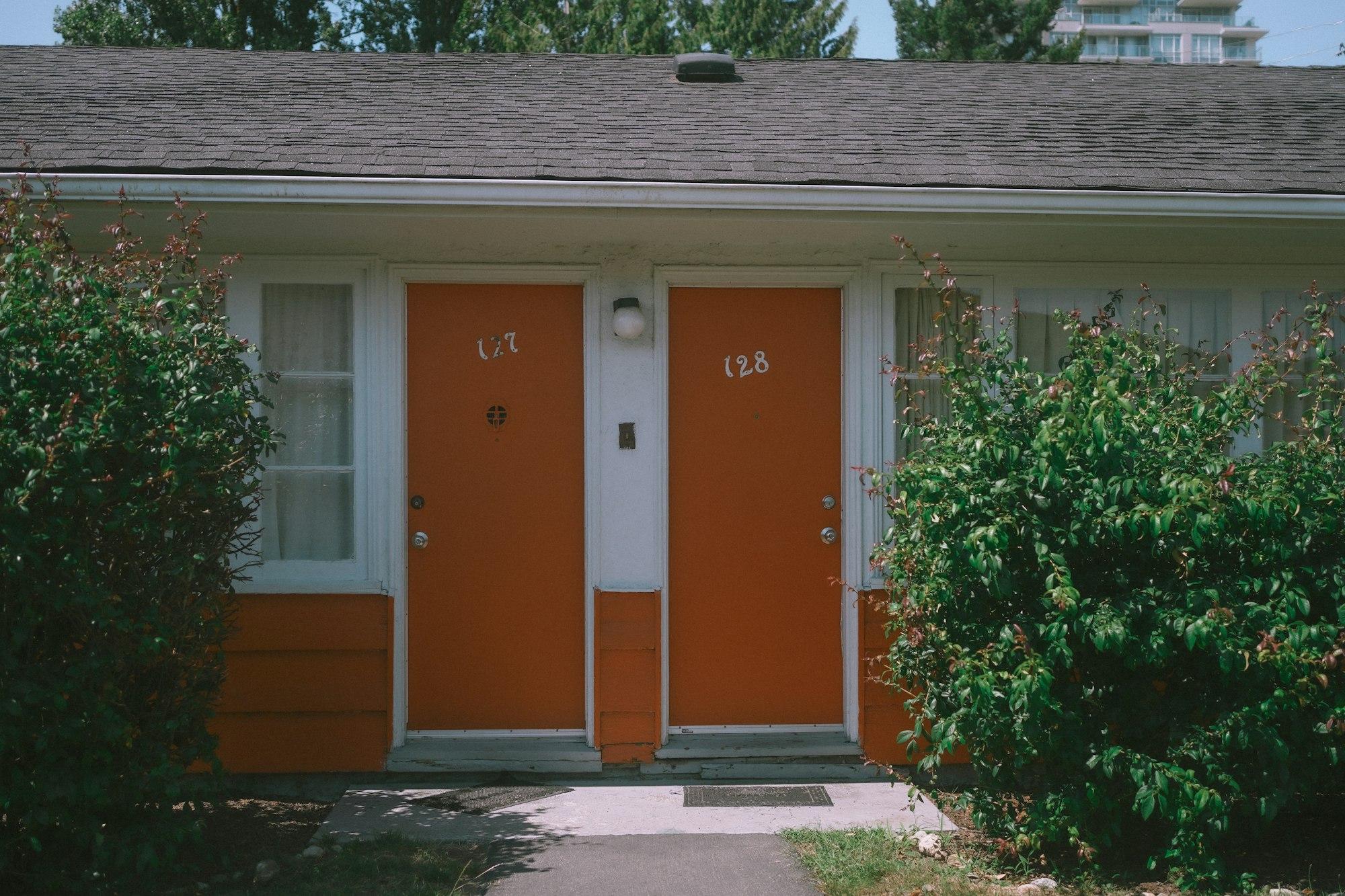
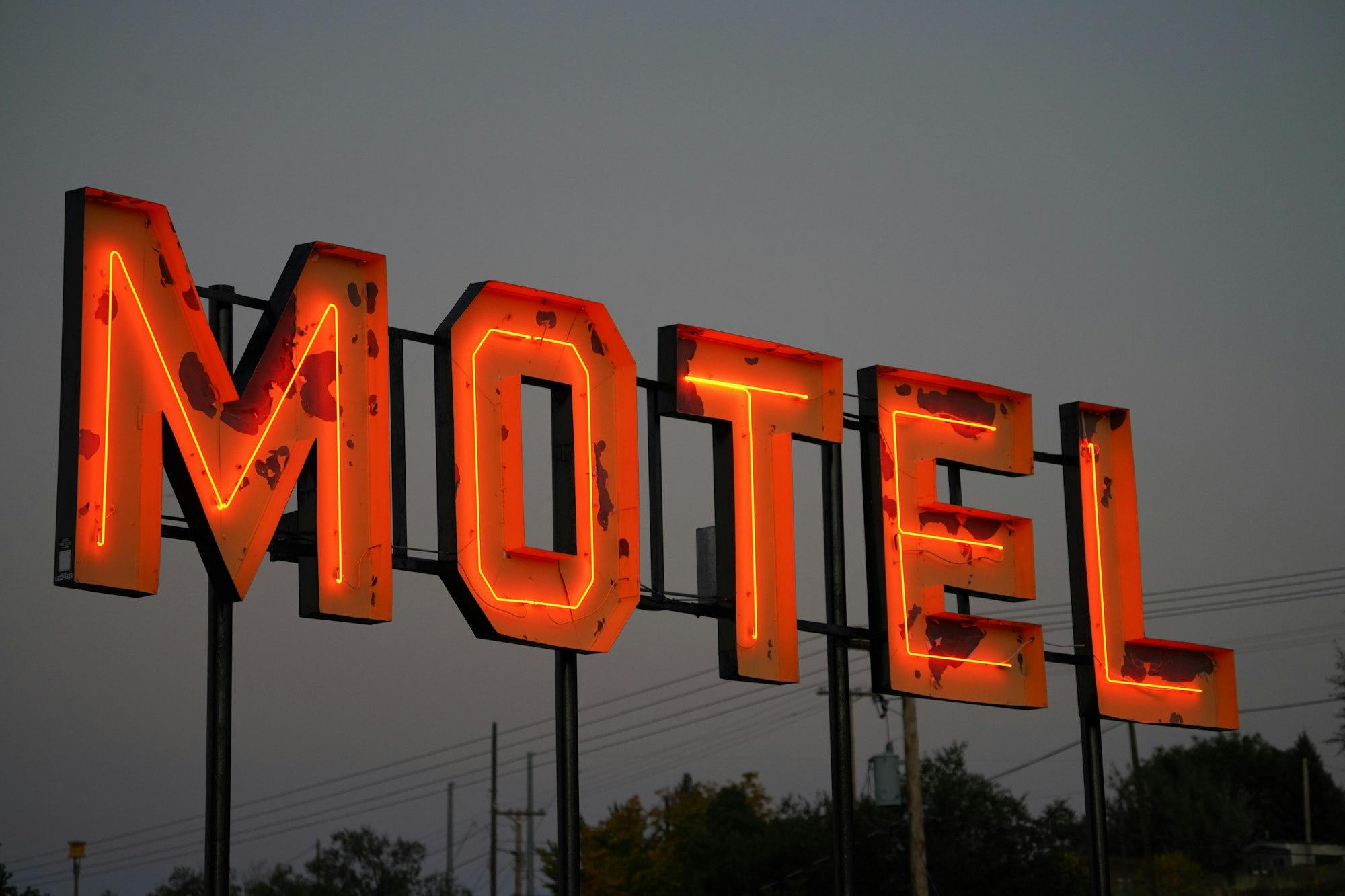
Motor court means lodging built around the car. Instead of a hotel lobby and corridors, guests drove up to the office, then parked at the door of their own unit around a shared court. The name was common from the 1930s to the 1950s and survives on old signs.
It sits in a line of names that followed the road: auto camps in the 1910s and 1920s, cabin camps and tourist courts in the 1930s, motor courts and motor hotels, and finally motels. The history of motels tells that story from the first tent camps.
How was a motor court laid out?
Units ran around three sides of a court, in a U or L, with the open side to the highway and the office at the entrance, where a sign could catch drivers. Each unit had parking at its door, and on some, a garage. The lawn in the middle gave the place its name and its calm.
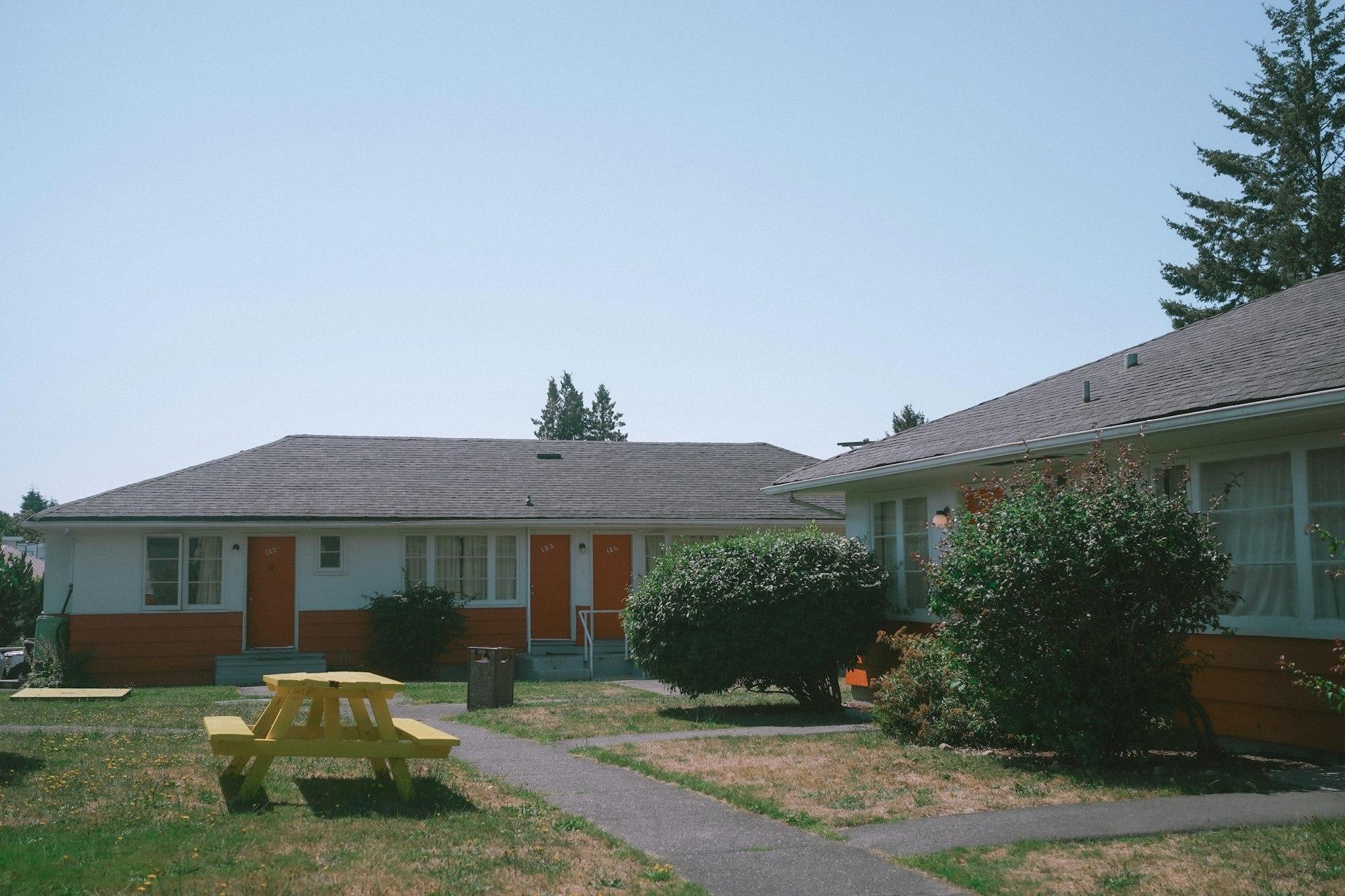
Some courts joined the cabins under one long roof as they grew. The Blue Swallow in Tucumcari still has a garage between its rooms, a detail that shows how important it was to keep the car close and covered.
Is a motor court the same as a motel?
Nearly. A motel is the motor court’s direct descendant, and the words overlapped for years. Court usually meant separate cabins or a single-storey ring of units; motel came to cover any car-first lodging, including two-storey blocks; motor inn meant a bigger property with a restaurant.
| Name | Common from | What it usually meant |
|---|---|---|
| Auto camp | 1910s to 1920s | A campground for motorists; bring your own tent |
| Tourist cabins, cabin camp | 1920s to 1930s | Separate one-room cabins, parking beside each |
| Tourist court, cottage court | 1930s | Better cabins, with electricity and bathrooms |
| Motor court, motor hotel | 1930s to 1950s | Units around a court, office by the highway |
| Motel | 1925 onward | Any car-first lodging; the name that won |
| Motor inn | 1950s to 1960s | A larger motel with a restaurant or lobby |
Where can you stay in a historic motor court?
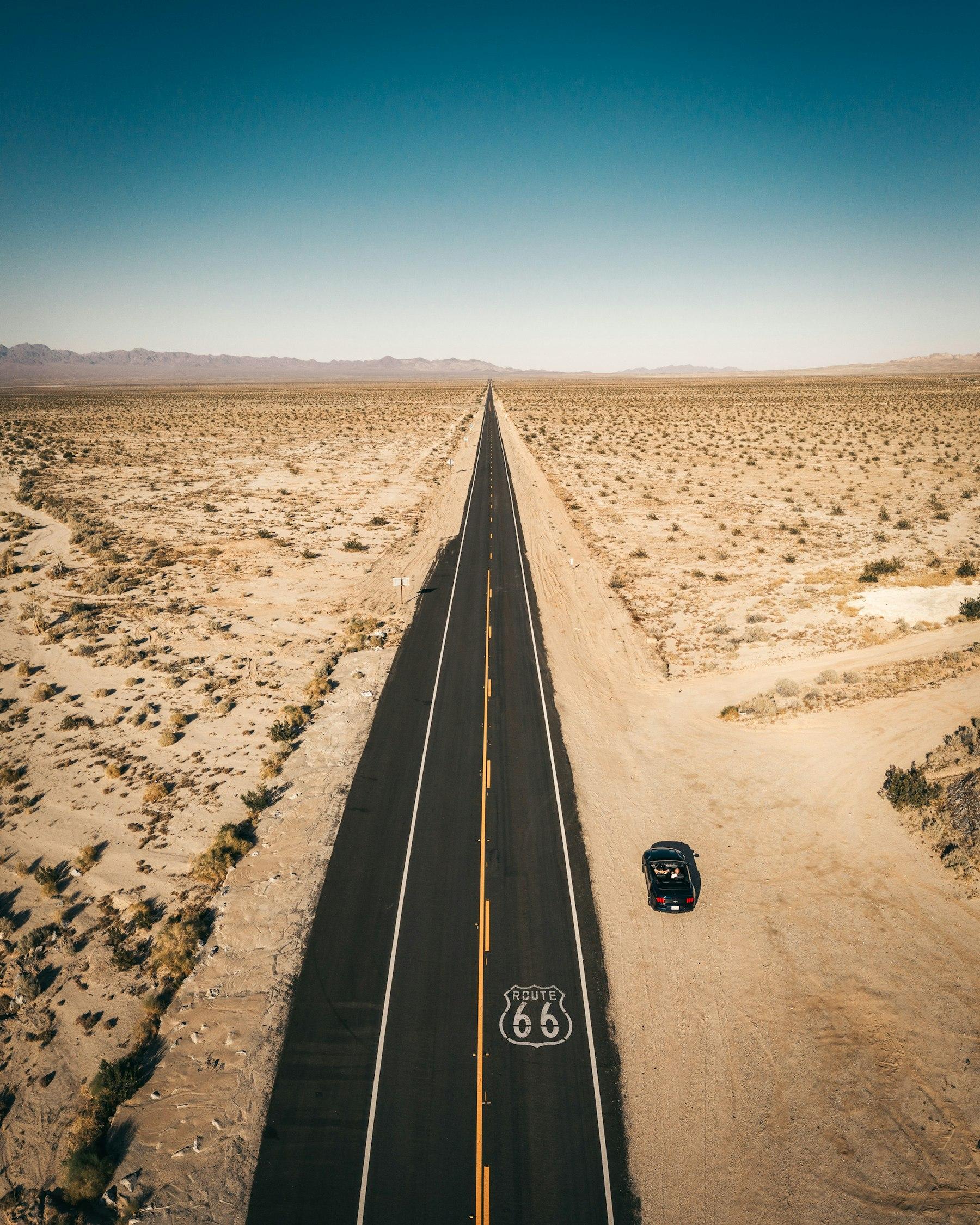
On Route 66, Boots Court in Carthage, Missouri, is the purest surviving example, a 1939 court restored room by room. The Blue Swallow in Tucumcari keeps its garages, the Wagon Wheel in Cuba has stone cottages, and Motel Safari shows the 1959 version of the same plan.
- Boots Court, Carthage, Missouri: A 1939 Streamline Moderne court at the meeting of US 66 and US 71, restored to 13 rooms by 2023.
- Blue Swallow Motel, Tucumcari, New Mexico: A 1939 court that keeps its original garages between the rooms.
- Wagon Wheel Motel, Cuba, Missouri: Ozark sandstone cottages from the 1930s, the cottage-court form at its most solid.
- Motel Safari, Tucumcari, New Mexico: A 1959 court, a later and more space-age take on the same layout.
Full details, with sources, are on Route 66 motels.
- Most courts are small: a dozen or so rooms is typical
- Book direct, and ask whether your unit has parking at the door
Frequently asked questions
A motor court is a roadside lodging made of separate cabins or units arranged around a court or lawn, each with parking at its own door, and usually an office facing the highway. It was the 1930s and 1940s step between tourist cabins and the single-building motel.
Mostly size and services. Motor inn, or motor hotel, was used from the 1950s for larger, often two-storey properties that added a restaurant, lobby or meeting rooms while keeping parking close to the rooms. A motel is usually smaller and simpler. Neither term has a legal definition, so signs used them loosely.
It is another name for the same thing: a motor court that called itself a hotel to sound grander. Motor hotel was also the long form of motel, the phrase Arthur Heineman shortened to Mo-Tel in 1925. In practice, motor court, motor hotel and tourist court overlapped for decades.
In real estate, a motor court is something else: a shared paved courtyard that several houses' garages open onto, instead of each house having its own driveway to the street. It borrows the old lodging layout but has nothing to do with motels. This guide is about the roadside kind.
Sources
- MotelWikipedia
- Motel Inn of San Luis ObispoWikipedia
- Boots Court Motelbootscourt66.com
- Boots Court MotelWikipedia
- Blue Swallow MotelWikipedia
- Wagon Wheel Motel, Cafe and StationWikipedia
- Motel Safari historical markerThe Historical Marker Database
Checked November 26, 2026. Motels change hands, close for the season and reopen; confirm details with the motel before you book. We are not paid by any motel or organisation named. Disclaimer · How we check facts