Motel glossary: the words on the old signs
The short answer
The words on old motel signs and in their histories, from auto camp and motor court to Googie, Populuxe and Doo Wop, plus the neon terms: electrode, argon, phosphor. Each is defined in one plain line, with its source and a link to the guide that explains it.
Index, A to Z
- Auto camp
- Tourist court
- Motor court
- Motor inn
- Porte-cochère
- Googie
- Doo Wop
- Neon
What do the old motel words mean?
Most of the vocabulary comes from three places: the roadside lodging names of the 1910s to the 1950s, the space-age design words of the post-war boom, and the physics of the neon sign. Here are 22 of them, alphabetically, each with its source.
- Argon
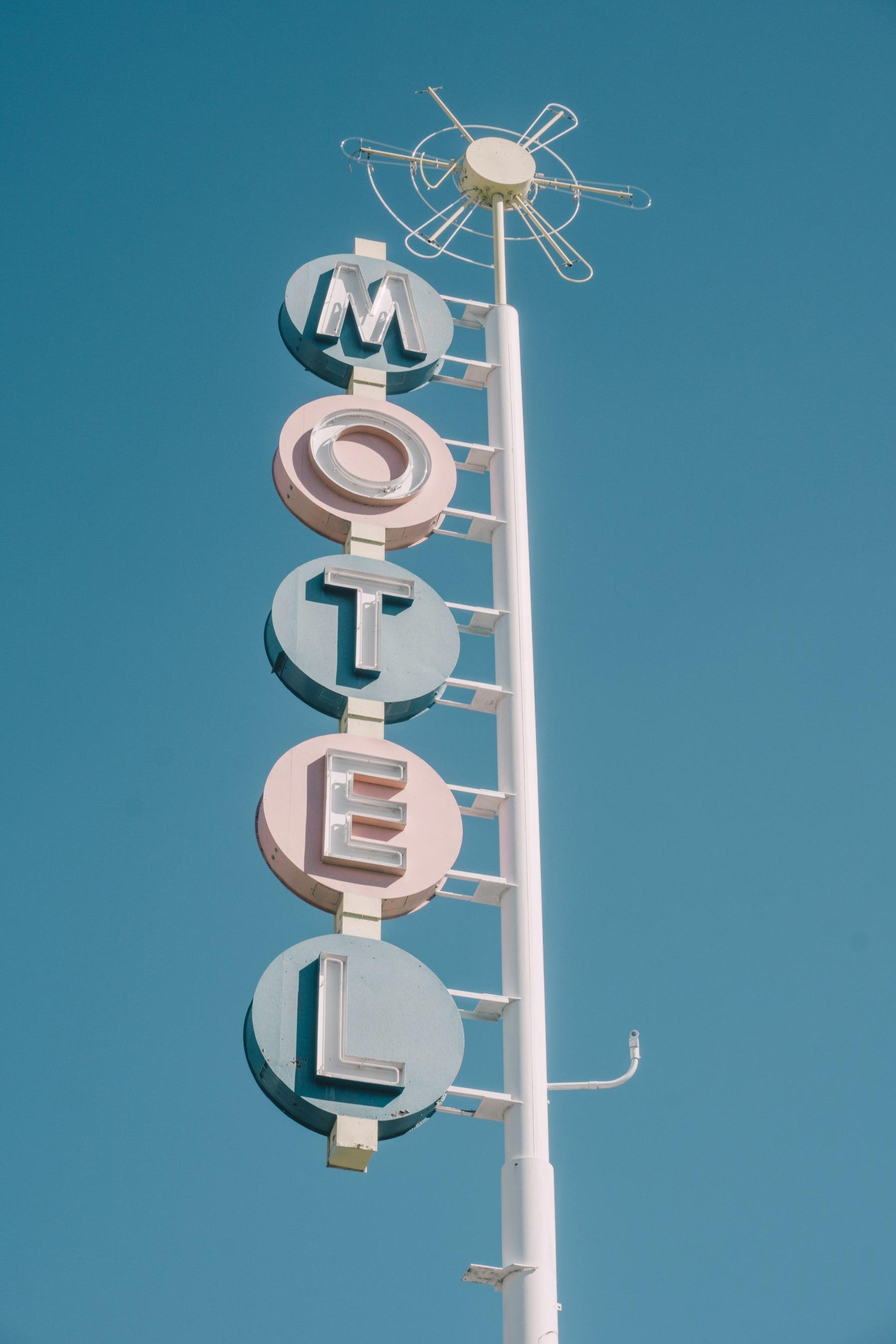
- A gas used in neon signs, usually with a drop of mercury; its ultraviolet makes phosphor coatings glow in other colours. Wikipedia · Neon motel signs
- Atomic Age
- The post-war optimism about science that put orbiting-electron motifs on 1950s signs and buildings. Wikipedia · Googie architecture
- Auto camp
- A campground for motorists, often run by a town, where travellers pitched their own tents; the first roadside lodging, from the late 1910s. Wikipedia · History of motels
- Boneyard
- A yard where items no longer in use are stored; at The Neon Museum in Las Vegas, the outdoor home of rescued signs. The Neon Museum, Las Vegas · Neon sign museums
- Cabin camp
- A group of small separate cabins for motorists, common in the 1930s; the step after the tent and before the court. Wikipedia · History of motels
- Doo Wop
- The name given in the early 1990s to the Wildwoods' 1950s and 1960s space-age resort motels, after the music of the era. Wildwood Crest Historical Society · Googie architecture
- Electrode
- The metal terminal sealed into each end of a neon tube, through which the current enters the gas. Wikipedia · Neon motel signs
- Googie
- The space-age American roadside style of about 1945 to the early 1970s, named after a 1949 Hollywood coffee shop. Wikipedia · Googie architecture
- LED neon
- Light-emitting diodes behind a diffuser that imitate the look of glass neon; cheaper and tougher, but not real neon. Wikipedia · Neon motel signs
- Mother Road
- The nickname for Route 66, the highway from Chicago to Santa Monica commissioned on November 11, 1926. Wikipedia · Route 66 motels
- Motel
- A blend of motor and hotel, from Arthur Heineman's Milestone Mo-Tel of 1925; lodging built around the car. Wikipedia · History of motels
- Motor court
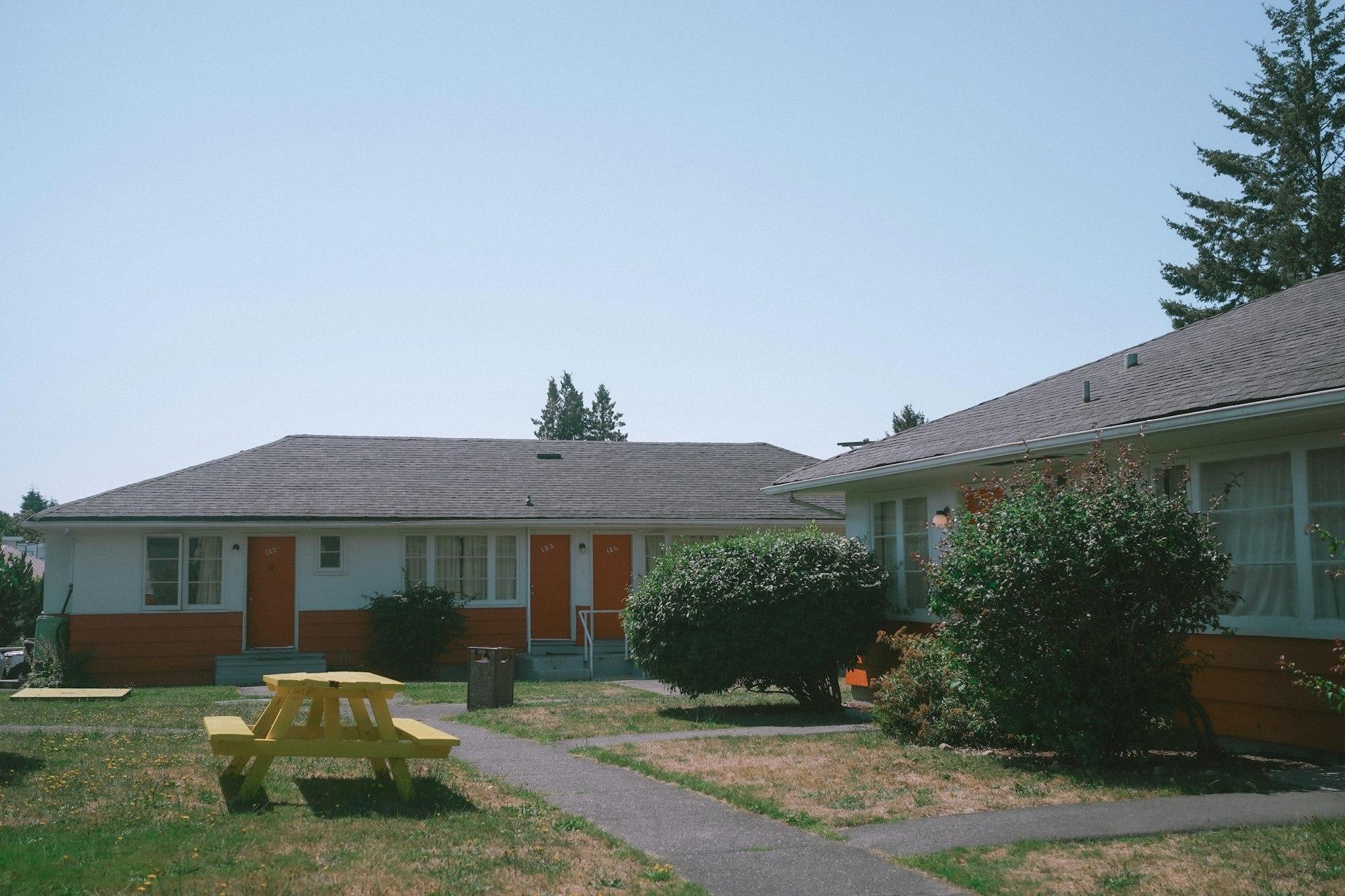
- Cabins or units around a court, each with parking at its door and an office by the road. Wikipedia · Motor courts
- Motor inn
- A larger motel, often two storeys, that added a restaurant or lobby; also motor hotel. Wikipedia · Motor courts
- National Register of Historic Places
- The official US list of places worth preserving; listing recognises a motel's significance but does not on its own prevent demolition. National Park Service · Motel preservation
- Neon
- A rare gas that glows red-orange in a high-voltage tube; first shown in signs by Georges Claude in Paris in 1910. Wikipedia · Neon motel signs
- Phosphor coating
- Powder inside a sign tube that turns ultraviolet light into visible colour; nearly 100 colours are available. Wikipedia · Neon motel signs
- Populuxe
- A blend of popular and luxury: the 1950s and 1960s look that made everyday goods glamorous and futuristic. Wikipedia · Googie architecture
- Porte-cochère
- A roofed drive-through entrance where a car can pull up out of the weather; on motels, usually over the office door. Wikipedia · Motor courts
- Streamline Moderne
- The 1930s style of rounded corners and horizontal bands that Googie grew out of; Boots Court is an example. Wikipedia · Route 66 motels
- Tourist court
- A 1930s cabin court with better facilities, such as electricity and indoor bathrooms; also cottage court. Wikipedia · Motor courts
- Wigwam Village
- A motel of concrete tipi-shaped rooms on Frank Redford's 1936 patented design; three of seven survive. Wikipedia · Wigwam Motel
What order did the motel names come in?
Roughly: auto camp in the late 1910s and 1920s, then cabin camp and tourist court in the 1930s, motor court and motor hotel from the 1930s to the 1950s, and motel, coined in 1925, which won out after the war. Motor inn arrived later for the bigger properties.
The full story is in the history of motels, and the layout behind the names is in motor courts.
Sources
- Porte-cochèreWikipedia
- MotelWikipedia
- Motel Inn of San Luis ObispoWikipedia
- Googie architectureWikipedia
- PopuluxeWikipedia
- Neon signWikipedia
- U.S. Route 66Wikipedia
- Wigwam MotelWikipedia
- The Doo Wop ArchitectureWildwood Crest Historical Society
- About The Neon MuseumThe Neon Museum, Las Vegas
- Route 66 Corridor Preservation ProgramNational Park Service, updated March 27, 2026
Checked November 26, 2026. Motels change hands, close for the season and reopen; confirm details with the motel before you book. We are not paid by any motel or organisation named. Disclaimer · How we check facts