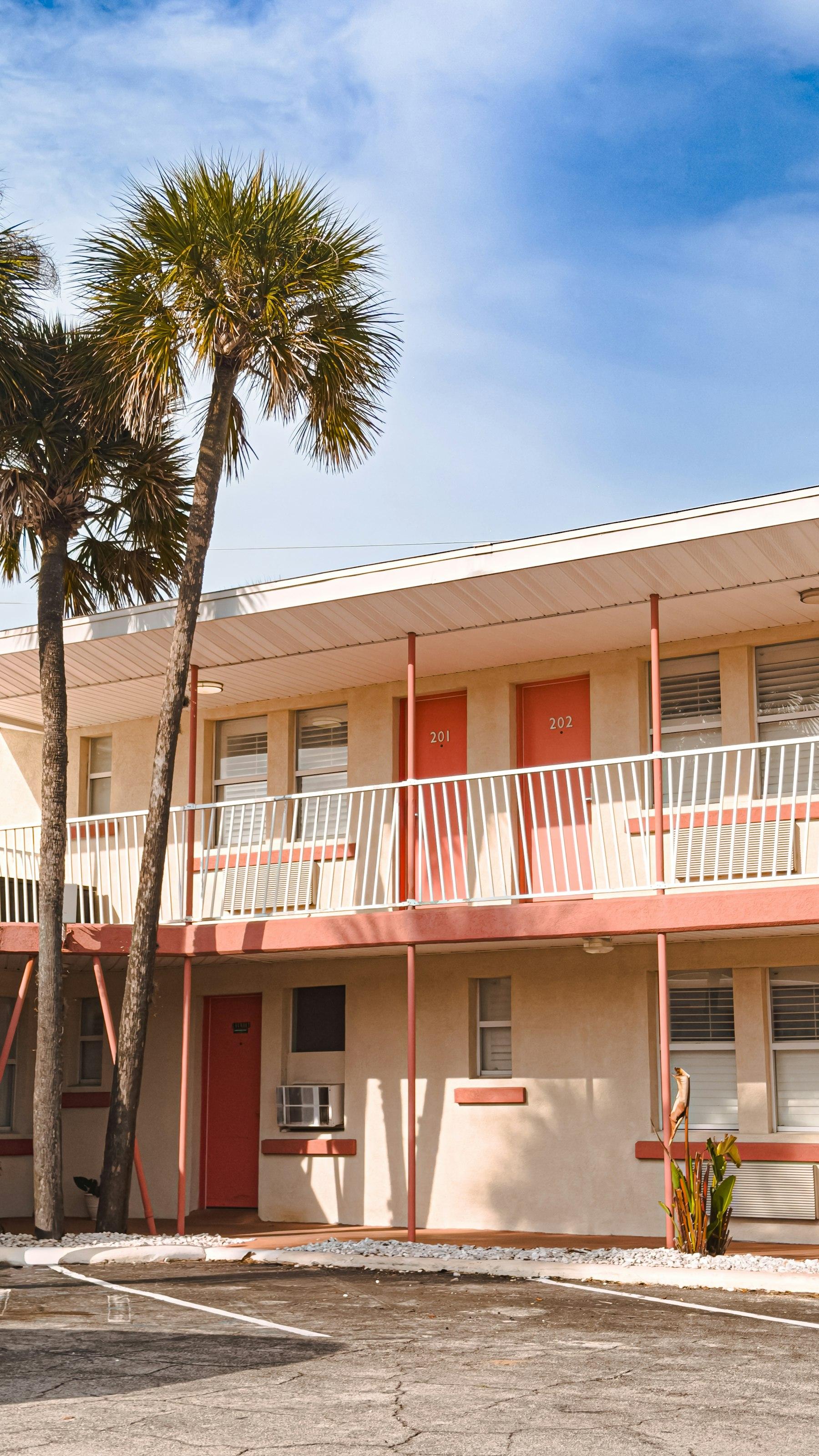
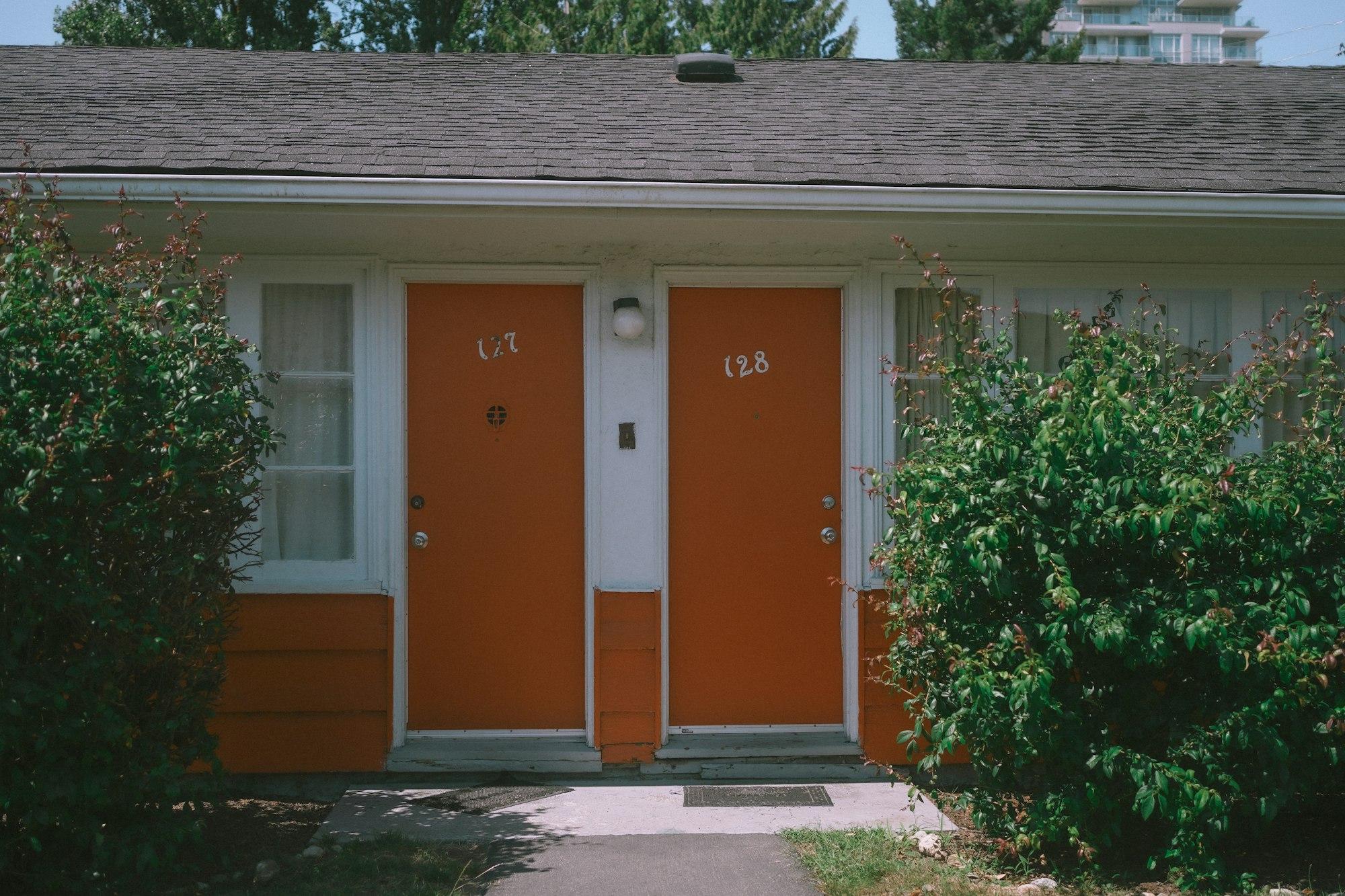
Googie, Populuxe and Doo Wop: reading a space-age motel
The short answer
Googie is the space-age roadside style of roughly 1945 to the early 1970s: upswept roofs, boomerangs, starbursts, atoms, glass, steel and neon. It is named after a 1949 Los Angeles coffee shop. Populuxe is the broader consumer-design term, and Doo Wop is the name New Jersey’s Wildwoods gave their version of the style.
The Googie shapes
What is Googie architecture?
Googie is a mid-century American style, popular from about 1945 to the early 1970s, that took its ideas from cars, jets and the Atomic and Space Ages. It grew out of 1930s Streamline Moderne and was built to be noticed from a moving car: angled roofs, bold signs, big glass and neon.
Where did the name Googie come from?
From Googie’s Coffee Shop on Sunset Boulevard in Hollywood, designed by John Lautner in 1949. Googie was the family nickname of the wife of the owner, Mortimer C. Burton. Douglas Haskell, editor of House and Home, coined Googie architecture in a 1952 article, half mocking it. The building was demolished in 1989.
Other names attached to the style include the architects Wayne McAllister, whose 1949 Bob’s Big Boy in Burbank is an early example, and the firm Armét & Davis, founded in 1947, along with the designer Helen Liu Fong.
What shapes define Googie design?
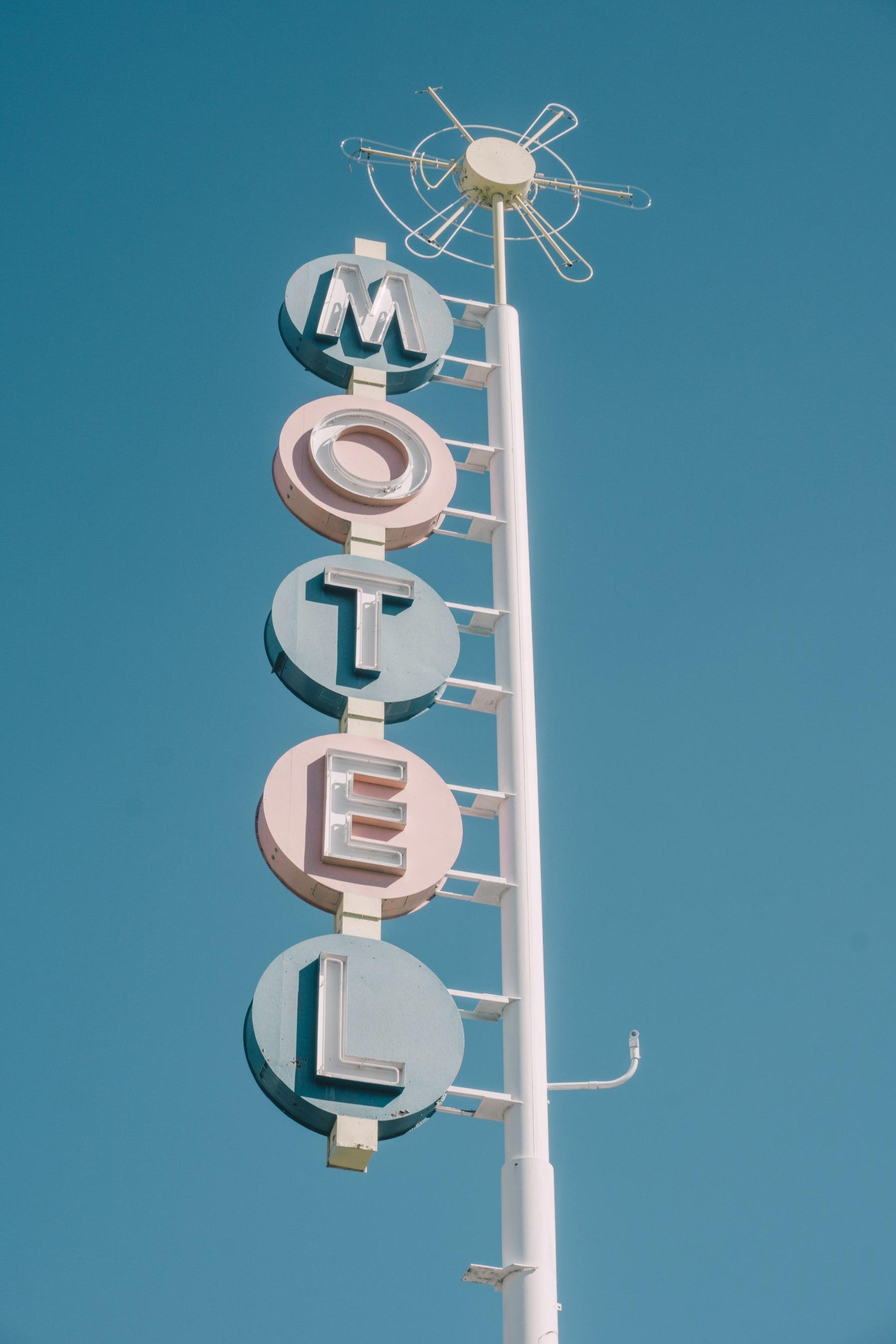
Six shapes do most of the work: the boomerang, the starburst, the upswept or angled roof, the atom, the free-form kidney pool and the canted pylon. Add bold colour, glass walls, steel and neon, and you have the vocabulary of a 1950s coffee shop, car wash or motel sign.
- Boomerang
- A curved, swept V shape used for roofs, sign frames, counters and pool decks; the period's favourite symbol of speed.
- Starburst
- A spiky star of radiating points, often on top of a sign, standing for the Space Age and the atom.
- Upswept roof
- A roof that tilts or sweeps upward toward the road, so the building seems to lift off; a Googie coffee-shop signature.
- Atom
- A diagram of orbiting electrons used as decoration, from the Atomic Age optimism of the 1950s.
- Kidney pool
- A free-form, curved swimming pool, the mid-century motel's selling point; the Caribbean Motel has a crescent-shaped one.
- Canted pylon
- A sign post or wall set at an angle rather than upright, to read as movement from a passing car.
What is Populuxe?
Populuxe is a portmanteau of popular and luxury: the 1950s and 1960s habit of giving everyday goods a glamorous, futuristic look. It covers far more than buildings, from tail fins and kitchen appliances to furniture, and it is the name most closely tied to the writer Thomas Hine’s book of that title.
On a motel, Populuxe is the extra: the lavish sign, the coloured panels, the promise of air conditioning and television spelled out in neon. Googie describes the building; Populuxe the whole consumer mood around it.
What is Doo Wop architecture?
Doo Wop is the name the Wildwoods in New Jersey gave their 1950s and 1960s resort motels: angular roofs and walls, bright colours, starbursts, boomerangs and plastic palm trees. The Mid-Atlantic Center for the Arts coined it in the early 1990s, after the music of the era, to help save the motels.
The Wildwood Crest Historical Society sorts the style into five themes: Modern or Blast Off, Vroom, Tiki or Polynesian, Chinatown Revival and Phony Colonee. You can see them, and the threats to them, in vintage motels beyond Route 66.
Which motels still show Googie design?
The Caribbean Motel in Wildwood Crest, built in 1957 with canted glass walls, a crescent pool and the first full-size plastic palms, is the best-documented, and is on the National Register. On Route 66, the 1959 Motel Safari in Tucumcari has the same space-age, Doo Wop spirit.
Frequently asked questions
After Googie's, a coffee shop on Sunset Boulevard in Hollywood designed by John Lautner in 1949; Googie was the family nickname of the owner's wife. House and Home editor Douglas Haskell saw it with the photographer Julius Shulman and popularised the term in a 1952 article, half in mockery. The building was demolished in 1989.
They describe much the same space-age style. Googie is the older, Los Angeles name, tied to coffee shops and car culture. Doo Wop is the name the Wildwoods in New Jersey gave their 1950s and 1960s resort motels in the early 1990s. Populuxe, a blend of popular and luxury, is the broader consumer-design term.
Populuxe is a blend of popular and luxury, describing the 1950s and 1960s look that dressed everyday things, from cars and toasters to motels, in a glamorous, futuristic style. The term is closely associated with the writer Thomas Hine's book Populuxe. On a motel, it shows in tail-fin signs, starbursts and lavish colour.
In Southern California especially: the oldest surviving McDonald's in Downey, the Theme Building at Los Angeles International Airport and Norms restaurants are well-known survivors. For motels, Wildwood's Caribbean Motel, a Googie or Doo Wop design of 1957, is on the National Register, and Tucumcari's 1959 Motel Safari shows the style on Route 66.
Sources
- Googie architectureWikipedia
- PopuluxeWikipedia
- The Doo Wop ArchitectureWildwood Crest Historical Society
- Preservation Stagnation on the Jersey ShoreNational Park Service
- Caribbean MotelWikipedia
- Motel Safari historical markerThe Historical Marker Database
- Doo Wop Preservation Leaguedoowopusa.org
Checked November 26, 2026. Motels change hands, close for the season and reopen; confirm details with the motel before you book. We are not paid by any motel or organisation named. Disclaimer · How we check facts