The history of motels, from auto camp to neon
The short answer
The American motel grew out of 1910s auto camps, then 1930s tourist cabins and motor courts. The word came from the Milestone Mo-Tel in San Luis Obispo, California, opened in 1925. Motels boomed after the Second World War, peaked at about 61,000 in 1964, and declined as interstates and chains took the traffic.
The motel, 1910s to now
- 1910sAuto campsCampgrounds for motorists, often run by towns
- 1925Milestone Mo-TelArthur Heineman's San Luis Obispo motel names the type
- 1930sTourist courtsCabins with electricity and indoor bathrooms
- 1951Motels pull aheadMotels overtake hotels in consumer demand
- 1985Route 66 retiredRemoved from the U.S. highway system
What were auto camps?
Auto camps were the first lodging built for motorists: campgrounds, often run by towns, where travellers pitched their own tents beside their cars. The first appeared in the late 1910s and spread through the 1920s, as cheap cars put families on roads that had few hotels outside the cities.
They were primitive and, in many towns, free or nearly so. As traffic grew, towns began charging and adding facilities, and private operators saw a business in it. The next step was to give travellers a roof.
What were tourist cabins and cabin camps?
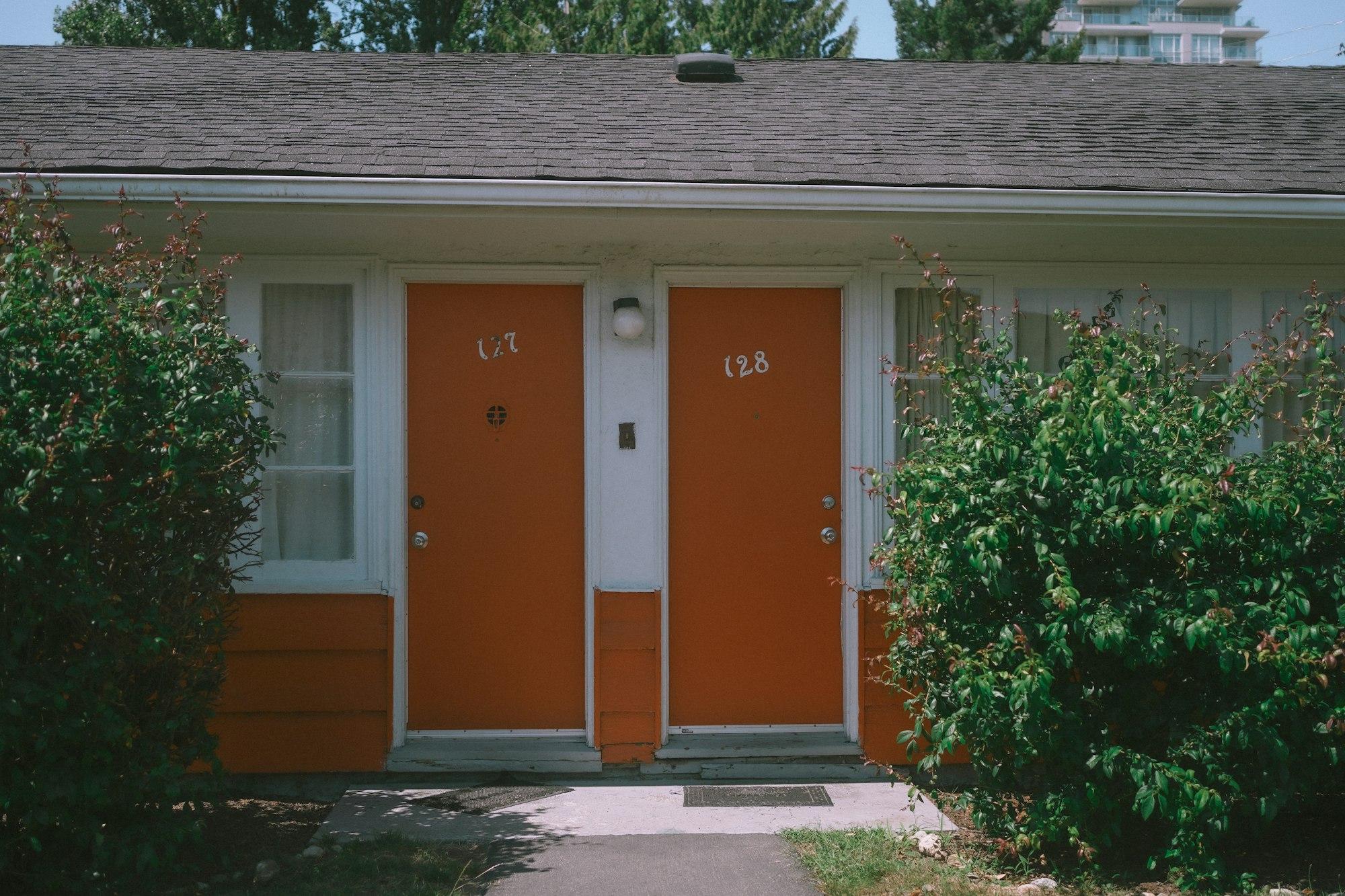
Tourist cabins were small, separate one-room buildings that replaced the tent. Cabin camps spread during the Depression of the 1930s, and the better ones, called cottage courts or tourist courts, added electricity and indoor bathrooms. Travellers parked beside their own cabin, which set the pattern for everything that followed.
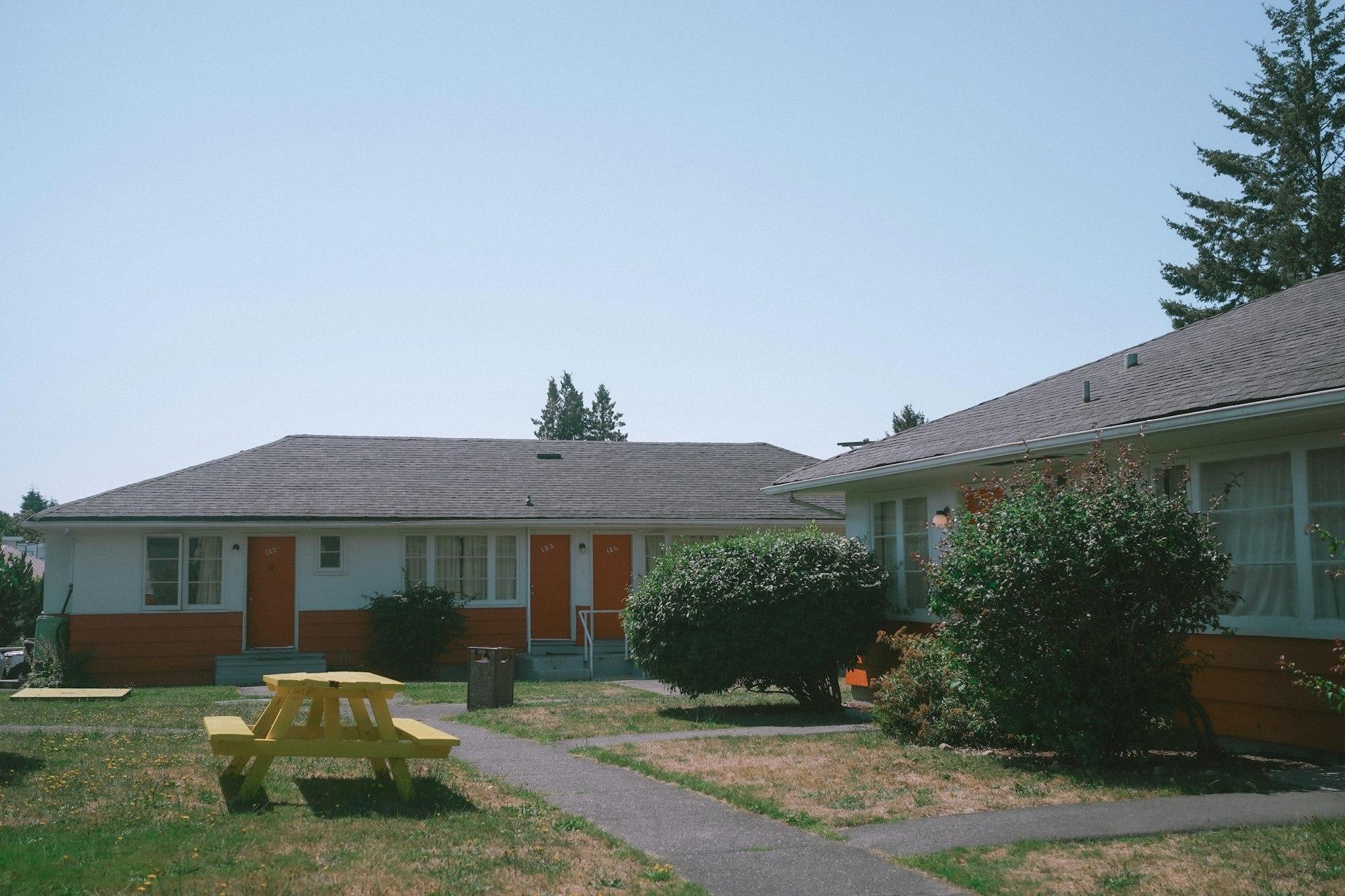
Rows of identical cabins were cheap to build in stages: an owner could add two or three a year as money allowed. Many surviving motels began this way, and some still have a cabin or two behind the later wing.
What did motor courts add?
Motor courts gathered the units around a court or lawn, often joined under one long roof with a parking space at each door and an office by the highway. They were tidier and more hotel-like than cabin camps, and the name motor court, or motor hotel, competed with motel for decades.
The layout is explained, with a plan, in our guide to motor courts. By 1947, roughly 22,000 motor courts were operating in the United States.
Who coined the word motel?
Arthur S. Heineman, a Pasadena architect, opened the Milestone Mo-Tel in San Luis Obispo on December 12, 1925, halfway between Los Angeles and San Francisco. Motor hotel would not fit on the roof, so he shortened it. The building, later the Motel Inn, closed in 1991.
The word was a marketing line before it was a building type. For years after 1925, roadside owners used whatever name sounded best on a sign: court, lodge, inn, cottages, motor hotel. Motel won slowly, helped by its length.
What caused the mid-century motel boom?
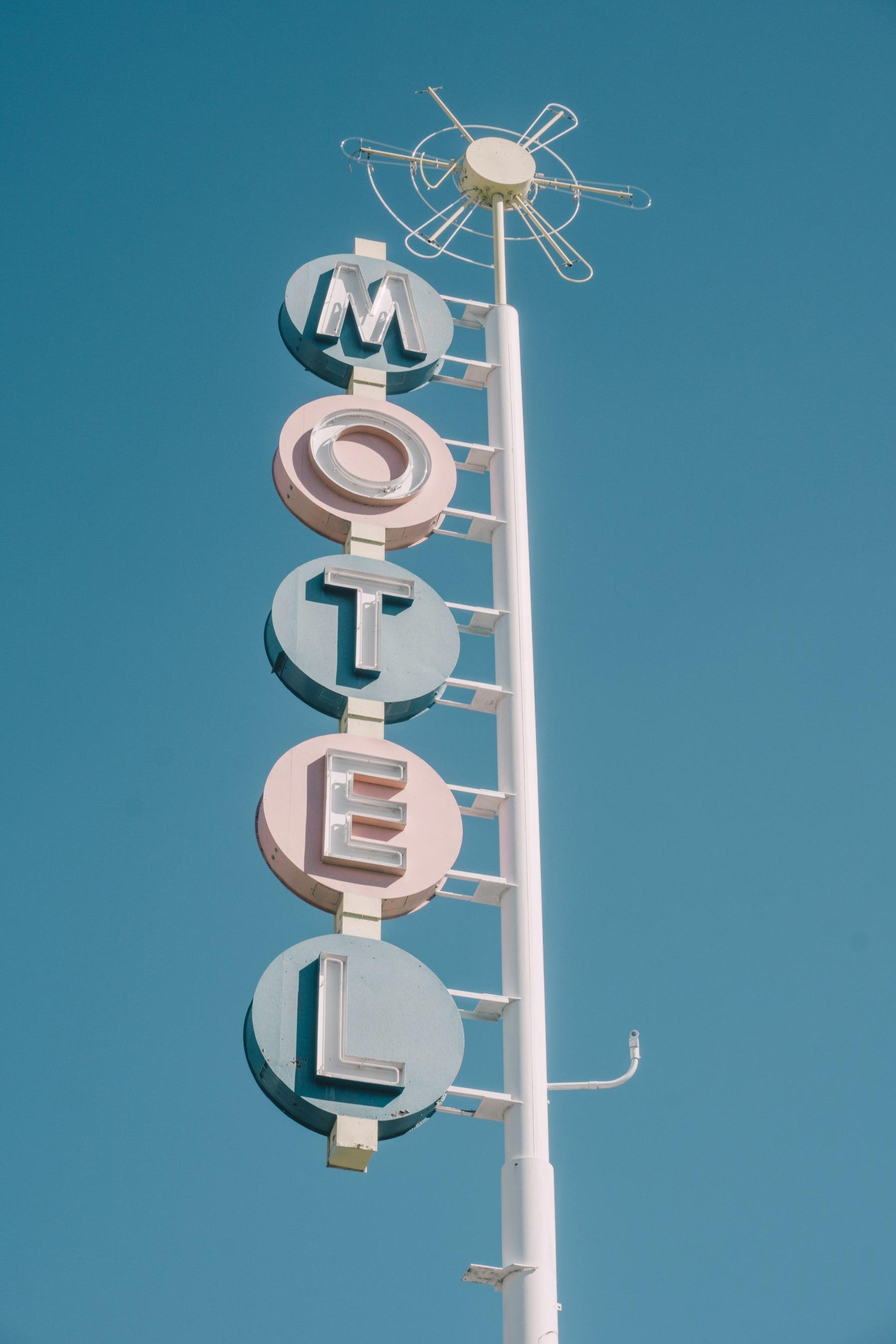
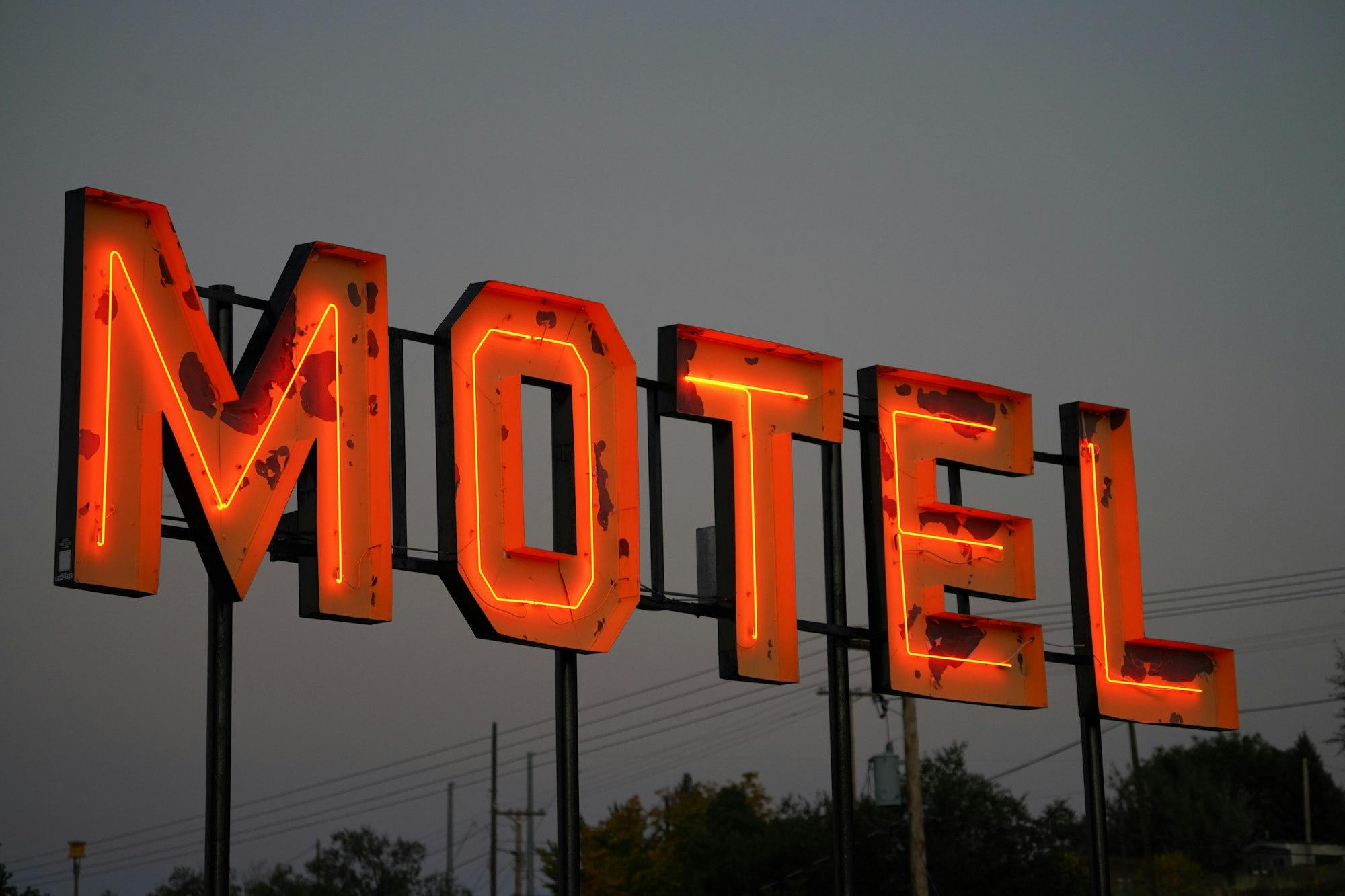
Post-war prosperity, new cars and paid holidays. About 50,000 motels were serving half of America's 22 million vacationers by 1950, and in 1951 motels passed hotels in consumer demand. Owners competed with pools, air conditioning, television and ever larger neon signs, which is where Googie and Doo Wop design came from.
This is the era most people picture when they hear historic motel, and the one preservation groups fight hardest for. Read how its look worked in Googie, Populuxe and Doo Wop and how its signs were made in neon motel signs.
Why did the old motels decline?
Interstates and chains. As freeways bypassed the old highways, chains built along the new exit ramps, and passing trade on the old roads dried up. The industry peaked at 61,000 properties in 1964 and fell to about 16,000 by 2012. Route 66 itself was removed from the highway system in 1985.
Chains had started early: Alamo Plaza Hotel Courts in 1929, referral groups such as Quality Courts and Best Western in the 1930s and 1940s, and the first Holiday Inn in Memphis in 1952. The independents that survived often did so by leaning into the history the chains could not offer.
Are historic motels coming back?
Many are. Restored independents now sell exactly what made them old-fashioned: neon, small courts and a sense of place. On Route 66 alone, Boots Court reopened all 13 rooms in 2023 and the Shamrock Court in Sullivan, Missouri, reopened in 2026 after more than a decade empty.
Grants help: the National Park Service’s Route 66 Corridor Preservation Program has co-funded neon signs, roofs and restorations since 2001. See motel preservation for how it works, and Route 66 motels for the ones you can book.
Frequently asked questions
The Milestone Mo-Tel in San Luis Obispo, California, designed by Arthur S. Heineman, opened on December 12, 1925, and is usually credited as the first building called a motel. It later became the Motel Inn, closed in 1991 and was largely demolished in 2006; fragments survive at the neighbouring Apple Farm Inn.
It is a blend of motor and hotel. Heineman wanted to call his building a motor hotel, but the words would not fit on the rooftop sign, so it became the Milestone Mo-Tel. The shortened word spread along the highways and slowly replaced older names such as tourist court and motor court.
The industry peaked in the early 1960s. By 1950 there were about 50,000 motels, by 1951 they had overtaken hotels in consumer demand, and the count peaked at 61,000 properties in 1964 before falling to about 16,000 by 2012, according to figures collected in Wikipedia's history of the motel.
Mostly because the traffic moved. New interstates bypassed the old highways and their towns, and chains built new motels at the exit ramps. Route 66 was removed from the U.S. highway system in 1985. Motels left on the old roads lost passing trade, and many closed, became apartments or were demolished.
Sources
- MotelWikipedia
- Motel Inn of San Luis ObispoWikipedia
- U.S. Route 66Wikipedia
- Route 66 Corridor Preservation ProgramNational Park Service, updated March 27, 2026
- Boots Court MotelWikipedia
- A restored Route 66 motel in Missouri welcomes travelers againKCUR / St. Louis Public Radio, October 2, 2026
- In Defense Of: Historic MotelsNational Trust for Historic Preservation
- John Margolies Roadside America Photograph ArchiveLibrary of Congress
Checked November 26, 2026. Motels change hands, close for the season and reopen; confirm details with the motel before you book. We are not paid by any motel or organisation named. Disclaimer · How we check facts